Sheet Metal Forming with Bending
Aluminum is one of the most popular metals in the world. It is light, strong, and does not rust easily. People use it to make cars, airplanes, electronics, and house parts. One common way to shape this metal is aluminum sheet metal forming with bending. In this article, you will learn how aluminum bending works, which aluminum types are best, and how to get the best results without breaking the metal.
What is Aluminum Sheet Metal Bending?
Sheet metal bending is a manufacturing process. It changes the shape of a flat piece of metal by applying force. The force bends the metal at an angle, usually creating a V-shape, U-shape, or channel. When you bend an aluminum sheet, the outside part of the bend stretches. At the same time, the inside part compresses (squeezes together). Because aluminum is dynamic, you must calculate the bend carefully. If you stretch it too far, it can crack or tear.Best Aluminum Grades for Bending
Not all aluminum is the same. Some types bend like soft butter, while others break like glass. Aluminum is grouped into “grades” (series) based on other metals mixed inside it. Here are the best grades for sheet metal forming:- Aluminum 3003: This is the best grade for general bending. It is very soft, highly formable, inexpensive, and resists rust well. Great for roofing, trays, and fuel tanks.
- Aluminum 5052: Extremely strong and bends very well. It resists saltwater corrosion, making it perfect for marine equipment, home appliances, and vehicle parts.
- Aluminum 6061: A very popular structural aluminum, but harder to bend. It can crack if the bend radius is too sharp. However, heat-treating it to an “O” temper makes it soft enough to bend smoothly. You can check detailed material data on MatWeb Material Property Data.
Important Rules for Successful Bending
To avoid cracking your metal sheets, you should follow these three essential rules:Use the Correct Bend Radius
The bend radius is the inside radius of the corner you are forming. If your bend radius is too small (too sharp), the outside surface will stretch too hard and crack. A good rule of thumb is to make the bend radius at least equal to or larger than the thickness of the aluminum sheet.Watch the Grain Direction
When aluminum sheets are made, they are rolled through huge steel cylinders. This creates a hidden directional pattern called the “grain line.” It is always safer to bend across (perpendicular to) the grain line rather than along (parallel to) the grain. Bending along the grain line often causes deep splits.Account for Springback
Metal has elastic memory. When you press an aluminum sheet to 90 degrees and release the machine, the metal will spring back slightly (for example, to 88 or 87 degrees). To fix this, you must slightly over-bend the piece so that it settles into the correct final angle.Best Aluminum Grades for Bending
Not all aluminum is the same. Some types bend like soft butter, while others break like glass. Aluminum is grouped into “grades” (series) based on other metals mixed inside it. Here are the best grades for sheet metal forming:- Aluminum 3003: This is the best grade for general bending. It is very soft, highly formable, inexpensive, and resists rust well. Great for roofing, trays, and fuel tanks.
- Aluminum 5052: Extremely strong and bends very well. It resists saltwater corrosion, making it perfect for marine equipment, home appliances, and vehicle parts.
- Aluminum 6061: A very popular structural aluminum, but harder to bend. It can crack if the bend radius is too sharp. However, heat-treating it to an “O” temper makes it soft enough to bend smoothly. You can check detailed material data on MatWeb Material Property Data.
Important Rules for Successful Bending
To avoid cracking your metal sheets, you should follow these three essential rules:Use the Correct Bend Radius
The bend radius is the inside radius of the corner you are forming. If your bend radius is too small (too sharp), the outside surface will stretch too hard and crack. A good rule of thumb is to make the bend radius at least equal to or larger than the thickness of the aluminum sheet.Watch the Grain Direction
When aluminum sheets are made, they are rolled through huge steel cylinders. This creates a hidden directional pattern called the “grain line.” It is always safer to bend across (perpendicular to) the grain line rather than along (parallel to) the grain. Bending along the grain line often causes deep splits.Account for Springback
Metal has elastic memory. When you press an aluminum sheet to 90 degrees and release the machine, the metal will spring back slightly (for example, to 88 or 87 degrees). To fix this, you must slightly over-bend the piece so that it settles into the correct final angle.Common Methods for Bending Aluminum
Air Bending
In this process, a tool, typical the upper tool in a press brake, is causing a bend of a sheet without any forming support from the lower tool.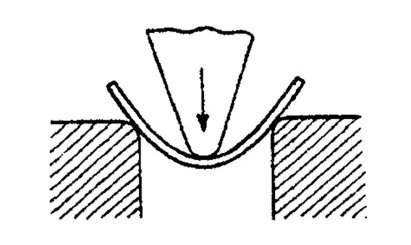 Figure 1 – Air bending
Video: Sheet Metal Forming with Bending
Die Bending
In this process, a female die is used together with the male die to give better tolerances to the bent profile The final stage of the process is often a calibrating force exerted between the dies.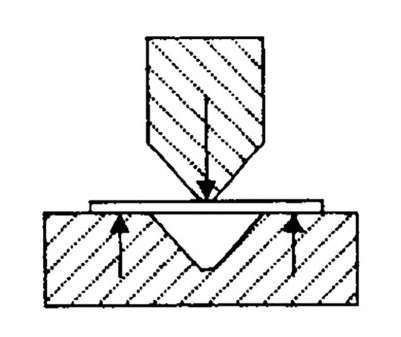 Figure 2 – Die bending
Folding and Wiping
In these bending operations, one part of the sheet is clamped and the free part is moved in a folding motion by a forming tool.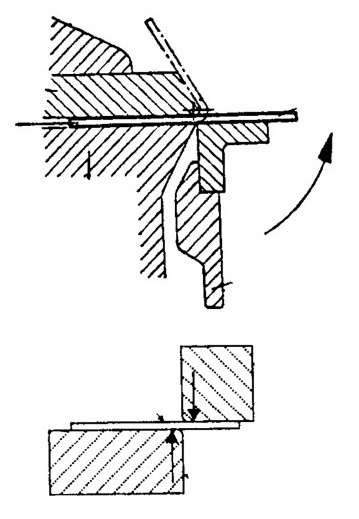 Figure 3 – Folding
Roll Bending
In this process, a cylindrical component is produced from a sheet by passing it between three staggered rolls.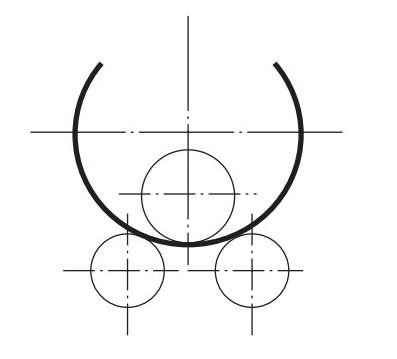 Figure 4 – Roll bending
Roll Forming
This process is the shaping of a (often complicated) long profile by passing a strip material from a coil through a number of forming rolls.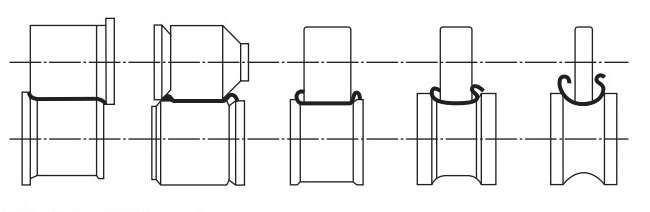 Figure 5 – Roll forming
Roller Flanging
This is the production of a flange on a hollow component by means of two shaped opposing rolls.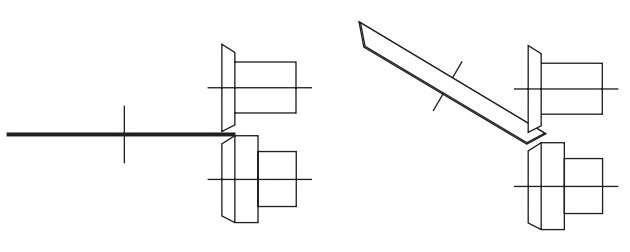 Figure 6 – Roller flanging