Aluminium Extrusion Blisters: Causes, Identification and Prevention
Blisters are a well-known surface defect in aluminium extrusion. They appear as local raised areas or bubbles on the surface of an extruded profile.
A blister indicates a subsurface cavity or separation beneath a relatively thin surface layer. However, this does not mean that every blister originates from gas porosity already present in the billet.
In conventional 6xxx extrusion, an important cause is air trapped during billet loading and upsetting in the container. If this air is not adequately released, it can become incorporated into the billet surface region and later carried into the extrusion.
Other mechanisms are also possible. In particular, hydrogen-related blistering can occur in some high-strength aluminium alloys.
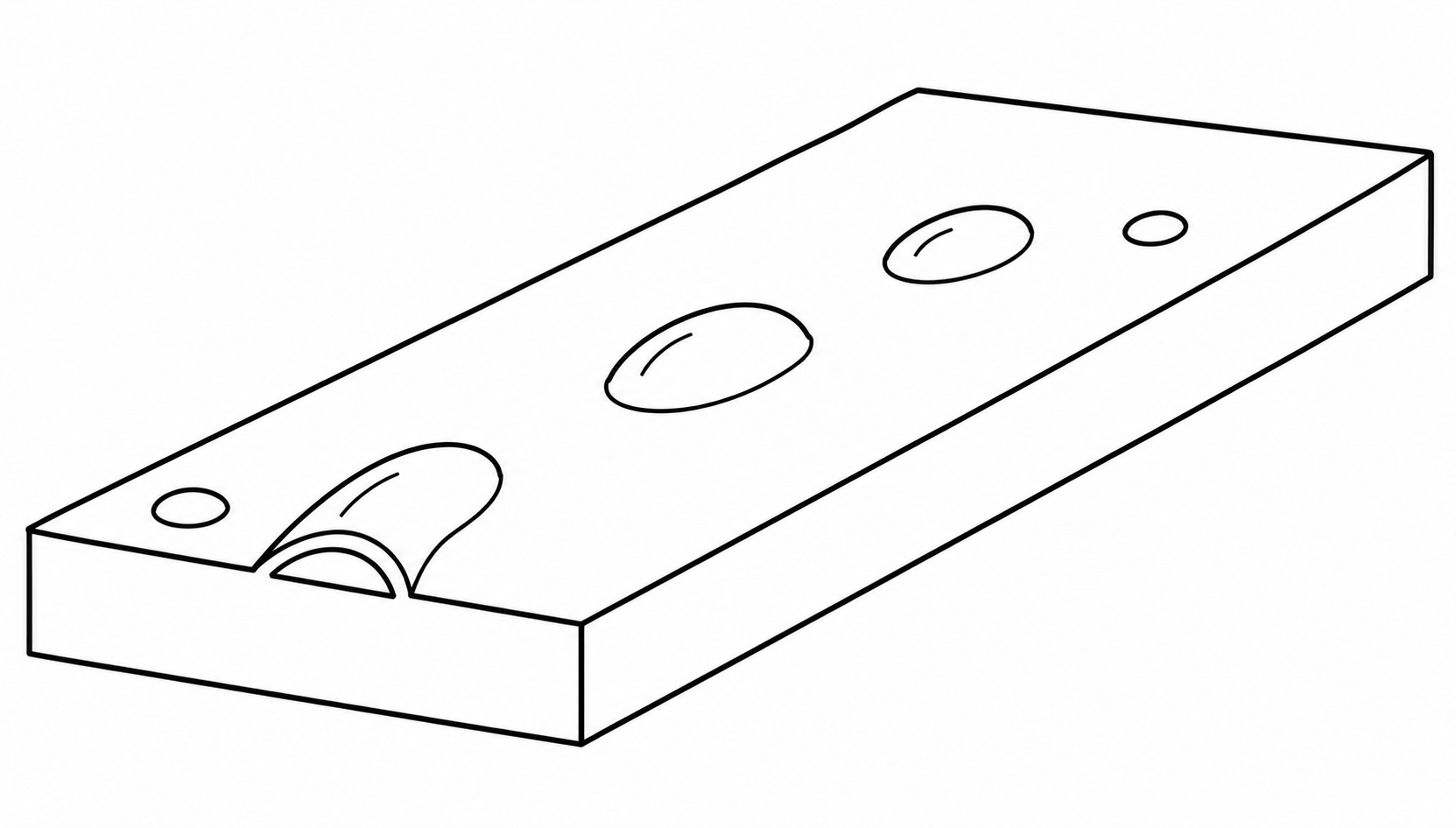 Figure 1. Typical appearance of blisters on an aluminium extrusion surface.
What Does an Extrusion Blister Look Like?
A blister is a local swelling of the profile surface. It may be round or elongated and can vary considerably in size.
The surface over the blister may initially remain intact. If the raised area is broken, cut or ground, a cavity or separation can often be found below the surface.
Blisters may occur individually or as a series of defects. Some are visible immediately after extrusion, while others become more pronounced during subsequent heating as gas in a subsurface cavity expands.
The position of blisters along the extrusion can also provide an important clue to their origin.
How Do Trapped-Air Blisters Form?
During direct extrusion, the billet is slightly smaller than the container bore. After loading, it rests on the bottom of the container, leaving air between parts of the billet surface and the liner.
When pressure is applied, the billet shortens and expands until it fills the container. This is known as upsetting.
Billet expansion is not necessarily uniform. As contact between the billet and liner develops, pockets of air can become enclosed. Air pockets may also form near the corner between the container wall and die face during upsetting.
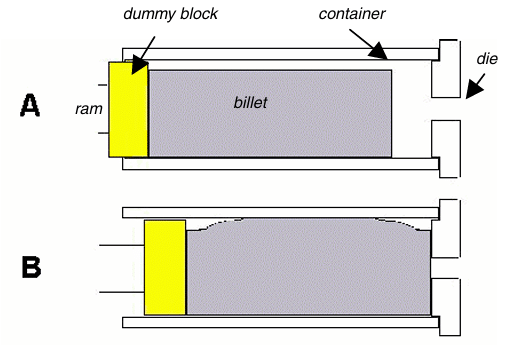 Figure 2. Billet before and during upsetting: (A) pre-extrusion; (B) upsetting.
Source: Bandar et al., “Physical and Numerical Modeling of Billet Upsetting”.
The burp cycle is intended to release this compressed air before extrusion proceeds. Its timing is important. If decompression occurs too early, sufficient billet-to-liner contact may not yet have developed and air can remain trapped. If extrusion begins before decompression, trapped air may instead become incorporated into the billet surface region.
For this reason, there is no universal burp pressure suitable for every press and extrusion condition.
An effective burp must occur at the correct stage of billet upset.
Experimental work on billet upsetting and air entrapment is described in the Aluminum Extruders Council paper “Upset” by Jowett, Hay and Parson. The authors specifically investigated how billet/container clearance, temperature conditions, burp and upset pressure affect air entrapment and blistering. AEC Members
Where Do Blisters Appear?
The position where air becomes trapped in the container does not necessarily correspond to the position where a blister later appears on the extrusion.
Experimental work by Jowett, Hay and Parson showed that trapped air can follow the same flow paths as the billet surface. Material near the container wall moves more slowly because of friction and can later move towards the die as part of the characteristic back-end flow or coring.
Consequently, air trapped during upsetting may eventually produce blistering near the back end of the extrusion.
This also explains the importance of adequate butt discard: extrusion should be stopped before undesirable back-end surface material reaches the die.
Surface flow and conditions at the die also play an important role in other extrusion surface defects, including die lines and pick-up.
Front-End Blisters
Front-end blistering can have a different origin.
Jowett, Hay and Parson reproduced such defects when air was trapped between the front face of a new billet and aluminium remaining in the die port from the previous billet. They described these as transverse weld blisters.
Poor butt shearing, retained aluminium around the die ports or volatile material such as lubricant can contribute to this mechanism.
Therefore, blister position is useful for troubleshooting:
Back-end blistering can direct attention towards upsetting, trapped air and billet-surface flow. Front-end blistering should also direct attention towards the transverse weld, butt shearing and die condition.
These are diagnostic clues rather than absolute rules.
Trapped Air or Hydrogen?
Not all extrusion blisters have the same origin.
For conventional 6xxx extrusion, an important mechanism is air trapped during billet upsetting and subsequently incorporated into the billet surface flow.
In high-strength alloys, particularly 7xxx alloys such as 7075, hydrogen can provide a different blistering mechanism. Hydrogen may originate from the billet itself or be introduced during subsequent processing. During heating or solution heat treatment, hydrogen accumulated in subsurface cavities can expand and produce visible blisters.
Saha discusses extrusion defects and the movement of trapped gases in high-strength aluminium alloys in Chapter 7, “Extrusion of Hard Alloys,” of Aluminum Extrusion Technology. The chapter deals particularly with 5xxx and 7xxx alloys.
Trapped-air blistering and hydrogen-related blistering should therefore be treated as different mechanisms requiring different troubleshooting approaches.
For normal 6xxx extrusion, the press cycle should therefore be investigated before assuming that a blister proves the presence of gas porosity in the original billet.
Causes and Prevention
Blister prevention requires control of the complete extrusion cycle rather than one single parameter.
Important factors include correct billet loading and upsetting, effective burping, clean butt shearing, absence of unwanted lubricant or other volatile contamination around the billet/die interface, and sufficient butt discard.
The location and timing of the defect should always be recorded. Comparison between billet lots can also help distinguish a press-related problem from a billet-related one.
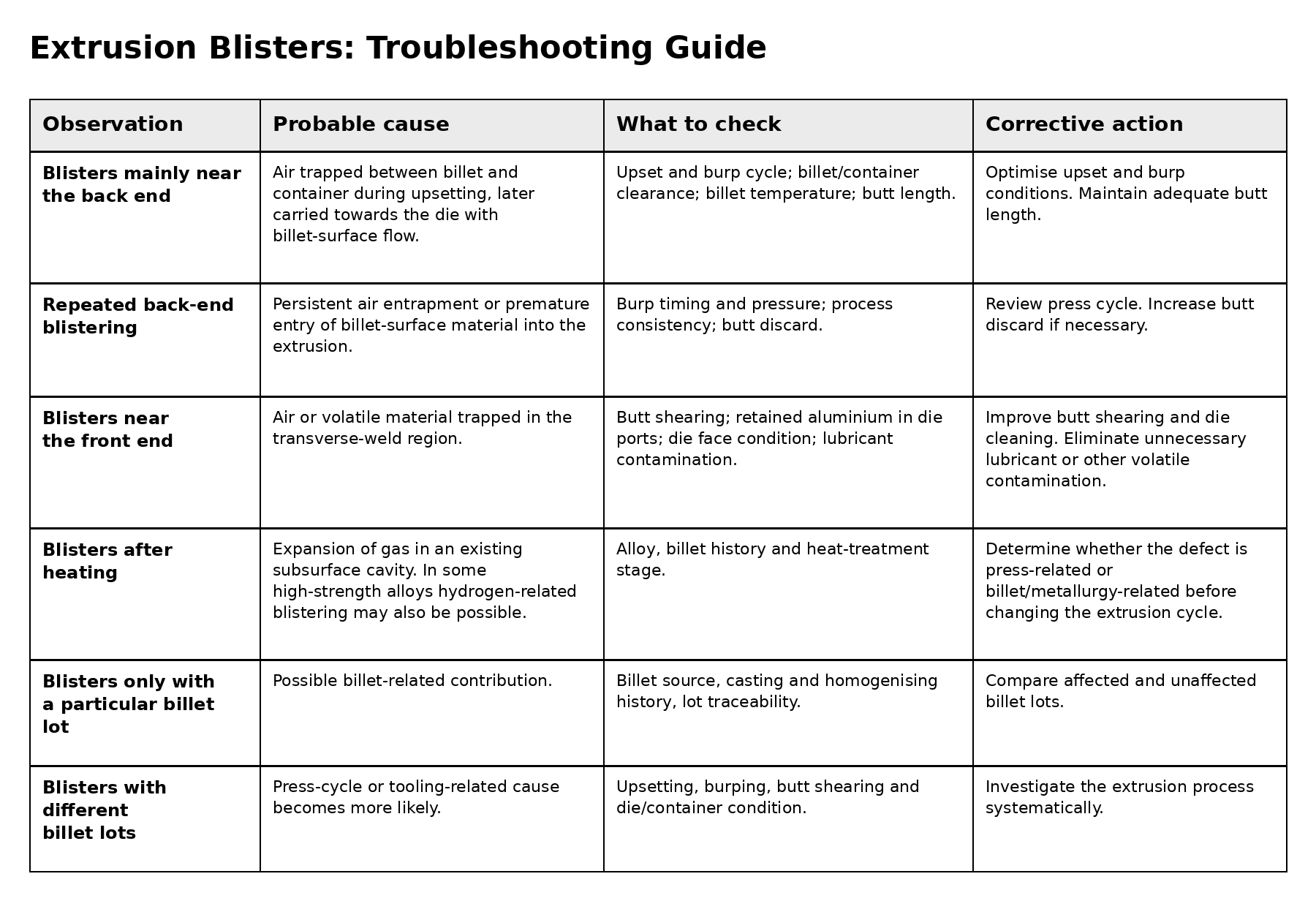 Figure 3. Troubleshooting guide for aluminium extrusion blisters: typical observations, probable causes and corrective actions.
Blisters should also be distinguished from speed cracks in aluminium extrusion, which have a different formation mechanism.
There is no universal burp pressure or butt length that prevents blistering on every press. These parameters must be established for the particular press, billet, alloy and extrusion conditions.
Conclusion
Blisters in aluminium extrusions can have different origins.
In conventional 6xxx extrusion, an important mechanism is air trapped during billet upsetting and subsequently carried into the extrusion with billet-surface flow. Front-end blistering may instead be associated with the transverse-weld region, while hydrogen-related blistering in high-strength alloys represents a different mechanism.
Effective troubleshooting therefore requires identifying where the gas was trapped and how the affected material subsequently moved through the extrusion process.
References
- Jowett, C.W., Hay, G., Parson, N. “Upset.” Proceedings of the Eighth International Aluminum Extrusion Technology Seminar (ET 2004), Vol. I, pp. 23–37, Orlando, Florida, May 2004, Extrusion Technology for Aluminum Profiles Foundation. Aluminum Extruders Council — Upset
- Bandar, A.R., Negvesky, L., Misiolek, W.Z., Kazanowski, P. “Physical and Numerical Modeling of Billet Upsetting.” Proceedings of the Seventh International Aluminum Extrusion Technology Seminar (ET 2000), Vol. I, pp. 159–166, Chicago, Illinois, May 2000. Bibliographic record — AGH University
- Saha, P.K. Aluminum Extrusion Technology. ASM International, 2000. Chapter 7, “Extrusion of Hard Alloys,” pp. 187–211. DOI 10.31399/asm.tb.aet.t68260187. ASM International — Chapter 7