AA-8000 Aluminium Building Wire Today: Alloys, Standards and Applications
The problems with aluminium residential wiring in the 1960s changed the electrical industry.
As discussed in the first article in this series, the failures were not simply caused by “bad aluminium.” They resulted from a combination of conductor material, small branch-circuit wires, connection technology, thermal cycling and installation practice.
The second article followed the metallurgical response: the development of new aluminium conductor alloys that eventually became part of the AA-8000 series, including AA 8030, 8076 and 8176.
But what happened next?
Today, aluminium is widely used in building electrical systems, particularly for larger conductors. Modern aluminium building wire, however, is very different from the small solid EC aluminum branch-circuit wire installed in many American homes in the 1960s.
The difference is not just the alloy.
Modern aluminium wiring is a system involving the conductor alloy, conductor construction, insulation, terminals and connectors, product standards and correct installation.
What Is AA-8000 Aluminium Building Wire?
The AA-8000 series is a family of wrought aluminium alloys developed for electrical conductor applications.
Unlike traditional EC aluminum, later designated AA 1350, these alloys contain controlled additions of elements such as iron, copper and magnesium. Different AA-8000 alloys use different combinations of alloying elements and processing routes.
Their purpose was not simply to increase electrical conductivity. High-purity aluminium already provides excellent conductivity.
Instead, the objective was to obtain a better balance of properties needed for insulated building wire:
- electrical conductivity;
- strength;
- elongation and flexibility;
- thermal stability;
- creep and stress-relaxation behaviour;
- performance during manufacturing, installation and termination.
Common examples include AA 8030, AA 8076 and AA 8176, although other electrical conductor alloys also exist within the 8000 series.
An important distinction is:
AA-8000 is a family of aluminium alloys. It is not a type of electrical cable.
The alloy is the material from which the metallic conductor is made. The finished electrical product must meet additional requirements for conductor construction, insulation, marking and intended application.
ASTM B800: The Wire Comes First
One of the basic material specifications is ASTM B800, Standard Specification for 8000 Series Aluminum Alloy Wire for Electrical Purposes — Annealed and Intermediate Tempers.
ASTM B800 covers 8000-series aluminium alloys fabricated into round wire in annealed or intermediate tempers. The wire can subsequently be stranded into a conductor or used as a solid conductor, normally with insulation.
The specification addresses properties of the aluminium wire itself, including mechanical properties and electrical resistivity.
It does not describe a complete insulated building cable.
This distinction becomes important when moving to the next stage.
ASTM B801: From Wire to Stranded Conductor
ASTM B801 covers concentric-lay-stranded conductors manufactured from 8000-series aluminium alloy wires covered by ASTM B800.
It includes conventional, compressed and compact-round stranded constructions made from round or shaped wires. These conductors are intended for subsequent covering or insulation.
Compact stranding is particularly useful with aluminium.
Aluminium has lower electrical conductivity by volume than copper, so a larger aluminium cross-sectional area is generally needed for comparable electrical resistance. However, aluminium has only about one-third the density of copper.
The result is a conductor that can be larger in cross-section but substantially lighter.
By reducing the spaces between individual strands, compact construction helps limit the overall conductor diameter.
What Does the NEC Actually Require?
ASTM specifications tell us about conductor material and construction. The National Electrical Code (NEC) addresses how conductors may be used in electrical installations in the United States.
This is where an important misconception should be avoided.
The NEC does not simply require every aluminium electrical conductor to be made from an AA-8000 alloy.
The requirement applies to specified conductor sizes and types.
NEC Section 310.3(B) requires solid aluminium conductors in sizes 8, 10 and 12 AWG — approximately 8.4, 5.3 and 3.3 mm², respectively — to be made from an AA-8000 series electrical-grade aluminium alloy.
For stranded aluminium conductors, the requirement applies to sizes 8 AWG through 1000 kcmil, approximately 8.4 to 507 mm², for specified NEC conductor types, including the RHH/RHW, XHHW/XHHN/XHWN and THW/THHN/THWN families, as well as certain Type SE service-entrance conductors.
For readers more familiar with metric conductor sizes, AWG means American Wire Gauge. In this system, a smaller gauge number represents a larger conductor. For very large conductors, American practice commonly changes from AWG designations to kcmil; 1000 kcmil corresponds to approximately 507 mm².
The letter combinations such as THHN, XHHW and RHW are North American conductor type designations. They describe characteristics of the finished insulated conductor, including its insulation system, temperature rating and suitability for particular environments.
The important point for this article is not the meaning of every letter.
It is this:
The NEC AA-8000 requirement applies to specified conductor types and sizes — not automatically to every aluminium electrical conductor.
The Cable Marking Matters
This distinction becomes particularly important with markings such as USE-2.
USE means Underground Service-Entrance. USE-2 is not included simply by default in the Article 310 list discussed above.
At the same time, a commercial conductor may carry more than one designation. For example, a product can be marked RHH/RHW-2/USE-2.
In such a case, the permitted applications depend on the complete product construction, listing and marking — not simply on the aluminium alloy inside it.
For an engineer selecting an aluminium conductor, therefore, the correct question is not only:
Which aluminium alloy is this?
It is also:
To which standard is the finished conductor manufactured, how is it marked, and for which installation is it approved?
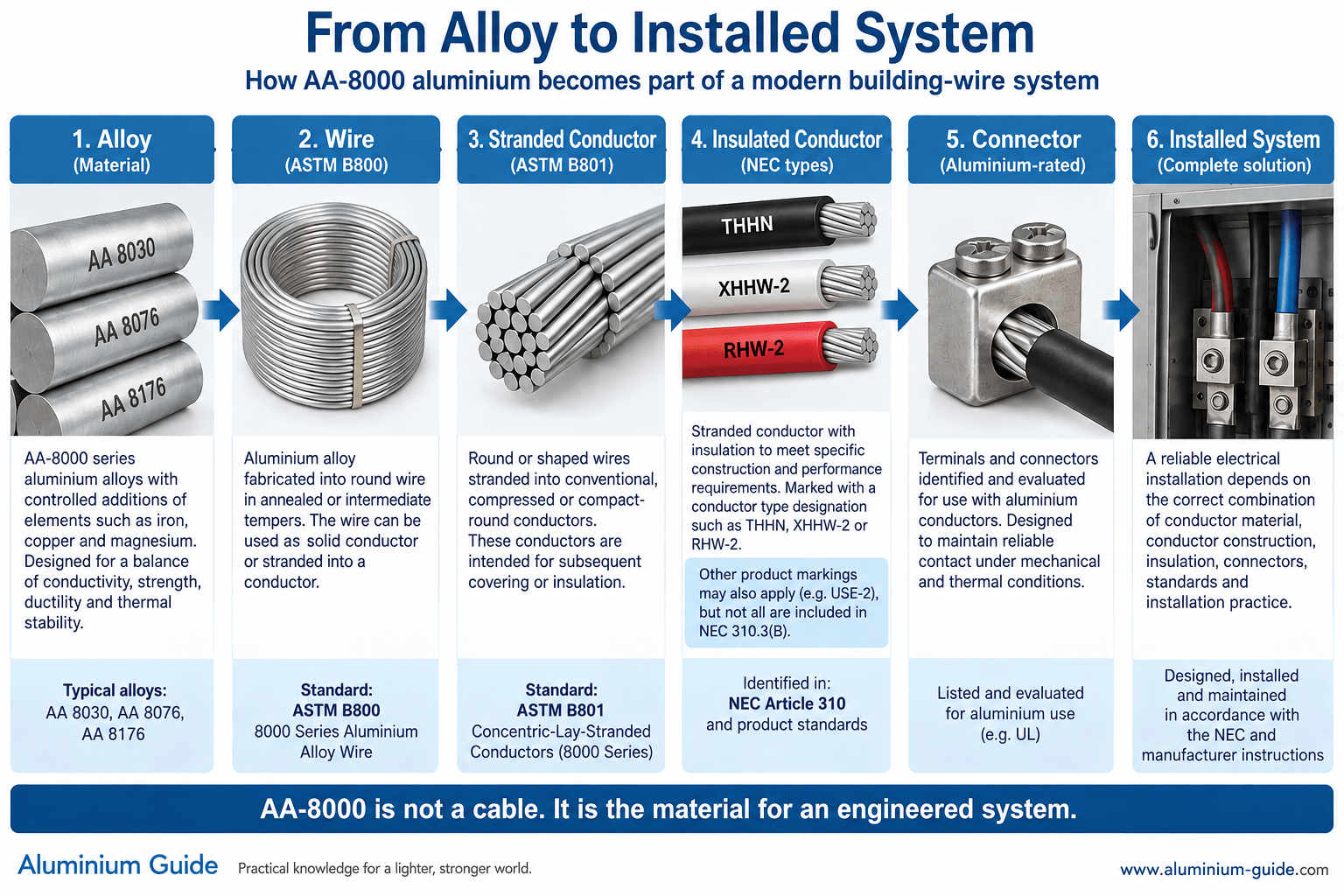 Figure 1. From AA-8000 aluminium alloy to a complete building-wire system:
wire, stranded conductor, insulation, aluminium-rated connection and installation.
Where Is Aluminium Building Wire Used Today?
Modern aluminium building wire becomes particularly attractive as conductor size increases.
Typical applications include service-entrance conductors, feeders, distribution circuits and larger commercial and industrial power circuits.
The reason is straightforward.
Aluminium provides roughly 61% of the conductivity of copper by volume, so a larger aluminium cross-section is normally required to obtain comparable electrical resistance.
But aluminium has only about 30% of the density of copper.
Therefore, even after increasing conductor size, an aluminium conductor can remain substantially lighter than its copper equivalent.
This combination of low mass, useful conductivity and material economics is particularly attractive for large conductors.
For small branch circuits, copper remains much more common. Its smaller conductor size and the widespread use of devices and installation practices built around copper make it convenient for these applications.
Modern aluminium building wire therefore should not be viewed simply as an attempt to return to the small solid aluminium branch-circuit wiring of the 1960s.
The Connection Is Still Critical
One lesson from the 1960s remains completely relevant:
A good conductor can still make a poor electrical connection if the termination is wrong.
Modern AA-8000 alloys do not eliminate the need for suitable connection technology.
Terminals and connectors used with aluminium conductors must be suitable and identified for aluminium. Installation must also follow the requirements of the equipment and connector manufacturer.
Correct conductor preparation, connector selection and tightening are therefore part of the electrical system.
This is why the reliability of modern aluminium wiring cannot be attributed to the alloy alone.
Why AA 1350 Did Not Disappear
The development of AA-8000 alloys did not make AA 1350 obsolete.
ASTM continues to maintain ASTM B231/B231M, covering bare concentric-lay-stranded conductors made from aluminium 1350 in several tempers for electrical purposes.
This is important historically.
The residential wiring problems of the 1960s did not demonstrate that AA 1350 was unsuitable as an electrical conductor material in general. They demonstrated that conductor material cannot be separated from its application and connection system.
An overhead stranded conductor and a small solid wire held under a device screw terminal operate under very different mechanical and thermal conditions.
AA 1350 therefore remains entirely appropriate for applications suited to its combination of high conductivity and other properties.
AA-8000 alloys address a different engineering requirement: obtaining a broader balance of electrical, mechanical and service properties for applications such as insulated building conductors.
The correct comparison is therefore not:
AA 1350 = old and unreliable
AA-8000 = new and reliable
Rather:
Different aluminium conductor alloys are optimized for different combinations of electrical, mechanical and service requirements.
What Really Changed Since the 1960s?
The alloy changed — but so did the rest of the system.
Conductor material changed. AA-8000 alloys provided a different balance of conductivity, strength, ductility, thermal stability and long-term mechanical behaviour.
Conductor construction changed. Modern large building conductors are normally stranded, and compact constructions can make aluminium more practical in cables and raceways.
Connection technology changed. Modern terminals and connectors intended for aluminium conductors are specifically designed and evaluated for that application.
Standards and testing changed. Material specifications, conductor standards, product standards and electrical codes now address different parts of the complete wiring system.
Installation practice changed. Conductor preparation, connector selection and installation according to manufacturer instructions are essential parts of a reliable connection.
Modern AA-8000 building wire and 1960s solid EC aluminum branch-circuit wire are therefore not simply two generations of the same product.
They represent substantially different conductor-and-connection systems.
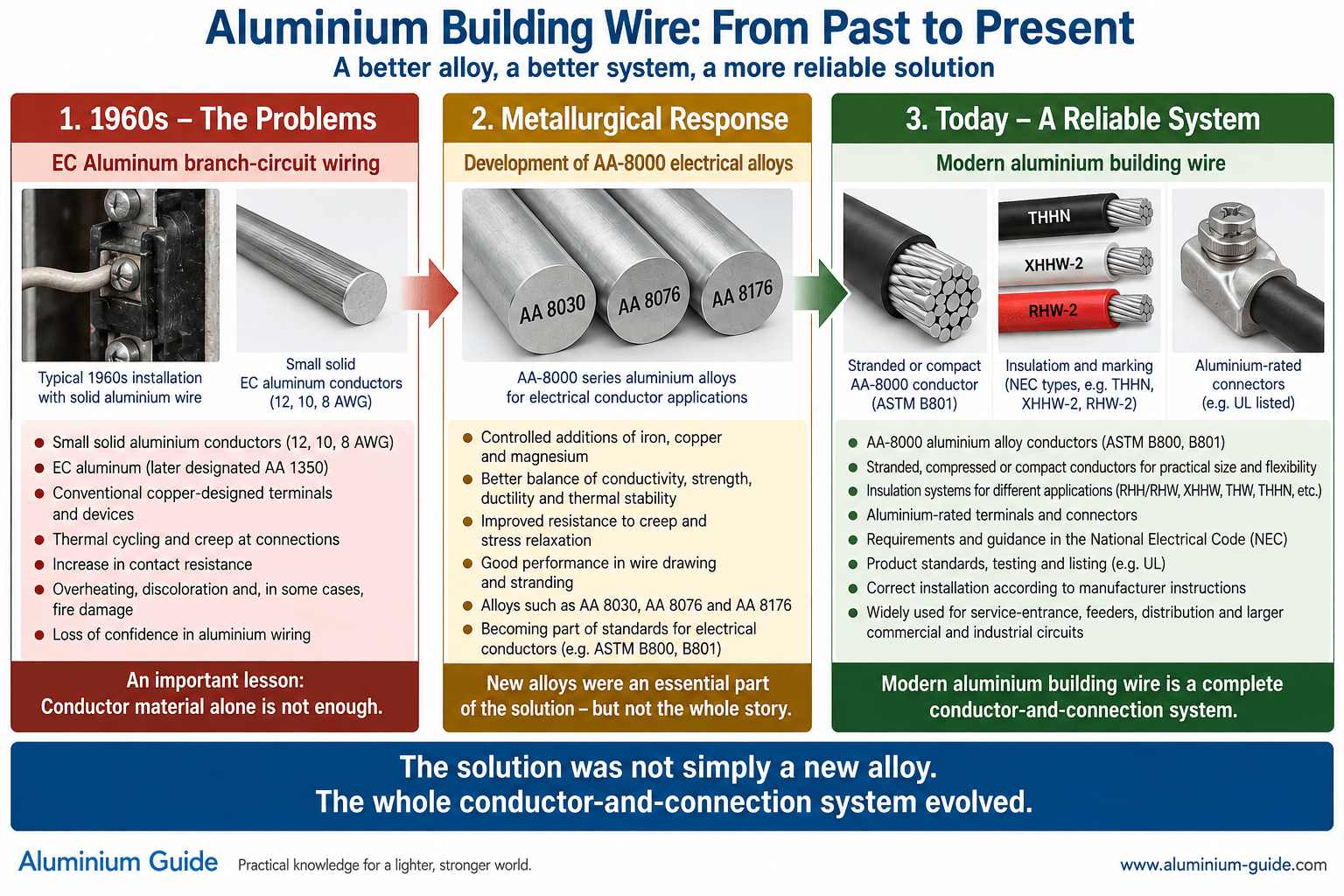 Figure 2. From 1960s EC aluminum branch-circuit wiring to modern AA-8000 building wire:
the alloy changed, but so did conductor construction, connection technology, standards and installation practice.
Conclusion
The history of aluminium building wire is sometimes reduced to a simple story: aluminium wiring caused problems in the 1960s, so the industry developed a better aluminium alloy.
The real history is more useful for engineers.
The early problems showed that an electrical conductor cannot be judged by conductivity alone. Mechanical behaviour at connections, temperature cycling, terminal design and installation practice also matter.
The development of AA 8030, 8076, 8176 and other AA-8000 electrical conductor alloys was an important part of the industry’s response.
But it was only one part.
Modern aluminium building wire combines purpose-developed conductor alloys, controlled conductor construction, suitable insulation, aluminium-rated connection technology, product testing, electrical codes and correct installation.
At the same time, AA 1350 continues to perform successfully in applications suited to its properties.
The lesson from this three-article series is therefore not that one aluminium alloy failed and another replaced it.
Materials must be selected as part of the complete engineering system in which they will operate.
References
- ASTM International. ASTM B800-05(2021) — Standard Specification for 8000 Series Aluminum Alloy Wire for Electrical Purposes — Annealed and Intermediate Tempers. ASTM B800-05(2021)
- ASTM International. ASTM B801-18(2023) — Standard Specification for Concentric-Lay-Stranded Conductors of 8000 Series Aluminum Alloy for Subsequent Covering or Insulation. ASTM B801-18(2023)
- ASTM International. ASTM B231/B231M-23 — Standard Specification for Concentric-Lay-Stranded Aluminum 1350 Conductors.
ASTM B231/B231M-23 - National Fire Protection Association. NFPA 70 — National Electrical Code (NEC), Section 310.3(B), Conductor Material.
NFPA — National Electrical Code - UL Solutions. Wire and Cable Application Guide. UL Solutions — Wire and Cable Application Guide
- Southwire. SPEC 10020 — RHH/RHW/USE-2 Aluminum with AlumaFlex® Brand Conductors. Southwire — SPEC 10020
Research Note
This article was prepared with the assistance of AI tools used for literature search, analysis of technical standards, and comparison of technical sources. The author reviewed the technical conclusions and, wherever possible, verified key information against original standards, electrical codes, and industry sources.
AI was used as a research assistant, not as a technical authority.