How Aluminum Changed Audi: The Story of a Car Revolution
Did you know why Audi cars are so fast and safe? The secret is under the paint. For over 40 years, the German brand has used aluminum instead of heavy steel. In this article, we will look at the history of Audi light bodies. You will learn how past technologies help create modern electric cars.
Why Did Audi Choose Aluminum?
In the 1970s, the world faced a fuel crisis. Petrol became expensive. Car brands needed to lower fuel use. The easiest way to do this was to make cars lighter. Normal steel makes cars heavy. Audi engineers looked at aluminum. People call it the “winged metal” because airplanes use it. It has three main benefits:
- Low weight. It is almost three times lighter than steel.
- No rust. Aluminum does not fear water or salt.
- Safety. The metal bends well during a crash and absorbs the impact.
But working with it was hard. It was difficult to weld and shape in the factory. Audi had to create new technologies from scratch.

Figure 1 [Audi]
The experimental Audi 100 (C3) proved that an aluminum body can save weight.
Timeline: From First Tests to Mass Market
The success story started in 1982. Audi signed a secret contract with Alcoa, an American aluminum company. Alcoa knew everything about making aluminum. Together, they started to change the car industry.
1985: The First Experiment
Engineers took a normal Audi 100 sedan and made its body from aluminum. The car became 46% lighter. But it was too expensive to sell to the public. The factory continued their tests.
1993: The Audi Space Frame (ASF) Concept
At the Frankfurt Motor Show, the company showed a shiny concept car. Its body had no paint. Everyone could see the clean, polished metal. Audi called this technology the Audi Space Frame (ASF). What is ASF? It is a strong skeleton made of aluminum tubes and cast parts. External panels are fixed onto this skeleton. This design makes the car very strong. You can read more about this technology on the official Audi MediaCenter website.
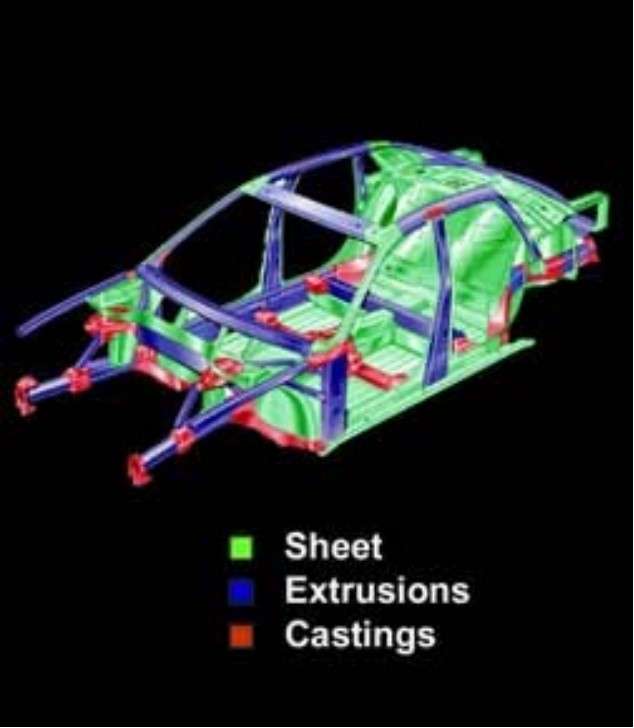 Figure 2 – The Audi Space Frame (ASF) [AAM]
1994: The Legendary Audi A8
The big luxury sedan Audi A8 (D2) was a sensation. It was the first mass-production car in the world with a full aluminum ASF body. Competitors from Mercedes and BMW were much heavier. The light weight helped balance out the heavy Quattro all-wheel-drive system.
1999: The Bold Audi A2 Experiment
Audi wanted to prove that aluminum is not just for expensive luxury cars. They created a small city hatchback called the Audi A2. The car weighed less than 900 kilograms. The fuel-saving diesel version used only 3 liters of fuel per 100 kilometers. That was a record. But because aluminum was expensive, the car cost too much. Buyers chose the cheaper steel VW Golf instead. Production stopped, but the experience remained.
The Anatomy of an Audi Body: Three Types of Aluminum
To make the ASF frame work, Audi split the metal into three forms. Each type has a specific job in the vehicle’s body structure:
- Aluminum Sheets: This is the “skin” of the car. It forms flat areas like the bonnet, roof, doors, and floor panels. Sheets are thin and easy to shape under massive industrial presses.
- Extruded Profiles: These are the “bones” of the skeleton. Liquid metal is pushed through shaped molds to create hollow tubes. These straight bars form the roof pillars, sills, and crash beams because they are very stiff.
- Cast Aluminum: These are the “joints” or connecting points. Molten metal is injected into precise molds under vacuum. Cast parts are used for complex corners, like suspension mounts and pillar joints, to absorb heavy impacts.
The share of these three types has changed over the years. Early pure aluminum cars needed more profiles and heavy joints, while modern cars use more sheets. Here is how the metal shapes are shared across different generations:
| Audi Model (Year) | Aluminum Sheets Share | Extruded Profiles Share | Cast Aluminum Share |
|---|---|---|---|
| Audi A8 D2 (1994) | Around 55% | Around 23% | Around 22% |
| Audi TT 8J (2006) | Around 45% | Around 23% | Around 32% |
| Audi A8 D5 (Modern) | Around 65% – 70% | Around 10% – 15% | Around 15% – 20% |
A New Era: Multi-Materials
In the 2000s, engineers realized something important. Using only aluminum was a mistake. In some parts of the car, steel works better. This brought the idea of the multi-material body. The motto became: “The right material in the right place.”
A modern Audi body is a smart mix. Engineers use four main materials:
- Aluminum. They use it for doors, bonnets, wings, and suspension parts. Audi uses specific aluminum alloy series for different jobs:
- 6000-series (AlMgSi): Used for flat outer panels like doors and bonnets because it hardens well during paint baking.
- 5000-series (AlMg): Great for internal structural parts because it is highly stretchable and easy to form into complex shapes.
- 7000-series (AlZnMg): Provides very high strength, which makes it perfect for crash bars and reinforcement profiles.
- Ultra-high-strength steel. They use it to build the cabin capsule to protect passengers if the car rolls over.
- Carbon Fiber. They use it in sports cars like the Audi R8 and the back shelf of the new Audi A8 for great stiffness.
- Magnesium. A very light metal. It forms the braces under the bonnet.
See how materials are shared in modern models:
| Car Model | Aluminum Share in Body | Main Construction Feature |
|---|---|---|
| Audi TT (8J) | Around 69% | Aluminum front and steel rear for perfect weight balance |
| Audi Q7 (4M) | More than 40% | Aluminum doors and suspension cut car weight by 325 kg |
| Audi A8 (D5) | Around 58% | Complex mix of aluminum, steel, magnesium, and carbon fiber |

How Does This Help Modern e-tron Electric Cars?
Today, the car world is moving to electricity. Electric cars have heavy batteries. Their weight is often more than 500 kilograms. How can we balance this weight? By using past experience! In the new Audi e-tron electric SUVs, the battery housings and crash structures use special aluminum alloys. This protects the battery in a crash and helps the car drive more kilometers on one charge. The story of aluminum continues today. You can read more about how these structures changed the industry in this article on CarBuzz.