Extrusion Presses for Soft vs. High-Strength Aluminum Alloys
Aluminum is one of the most useful metals in the world. People use it to make windows, cars, airplanes, and bridges. To make these items, factories use a process called extrusion. They push heated aluminum through a shaped hole (called a die) to make long metal parts.
However, not all aluminum alloys are the same. Soft alloys and high-strength alloys need very different extrusion presses. In this article, we will look at how these machines differ.
What Are Soft and High-Strength Aluminum Alloys?
Before we look at the machines, let us understand the two main types of aluminum alloys:
- Soft and Medium-Strength Alloys (6000 series): Examples include 6063 and 6082. These alloys are easy to shape. They are used for building frames, doors, and everyday products.
- High-Strength Alloys (2000 and 7000 series): Examples include 2024 and 7075. These alloys contain elements like copper and zinc. They are very strong and hard to bend, so they are used in aerospace and heavy equipment.
Key Differences in Extrusion Presses
Because high-strength alloys fight back against deformation, the machines that process them must be built differently. Here are the major differences:
1. Pressure and Machine Strength
To push a soft alloy through a die, you need medium pressure. To push a high-strength alloy, you need extremely high pressure—often twice as much force. As a result, presses for strong alloys are much larger, heavier, and stiffer to prevent the machine frame from bending under load.
2. Extrusion Speed
Speed is one of the biggest differences in factory production:
- Soft Alloys: Press out very fast, often at speeds of 15 to 80 meters per minute.
- High-Strength Alloys: Press out very slowly, usually between 0.5 and 5 meters per minute. If you push them too fast, friction creates too much heat and cracks the metal.
3. Direct vs. Indirect Extrusion
Most soft alloys use the direct extrusion method, where the metal billet moves inside the container. This creates friction, but soft metal can handle it.
High-strength alloys often use indirect extrusion. In this method, the die moves into the metal billet. This removes friction between the metal and the container wall, making it easier to push hard metals smoothly without creating internal defects.
See figures 1-3 from the authoritative textbook by P.K. Saha
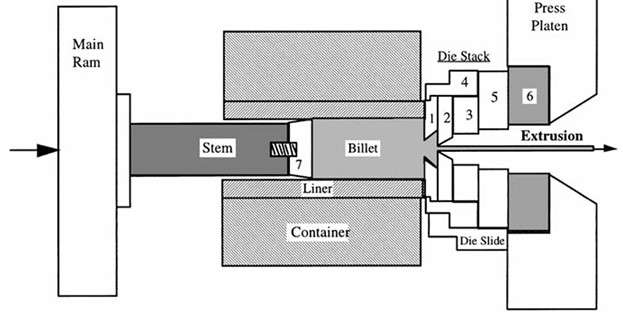 Figure 1 – Tooling configuration in direct extrusion process with feeder plate die
for softer alloy.
1, feeder plate; 2, die; 3, backer; 4, die ring; 5, bolster; 6, pressure pad; and 7, fixed dummy
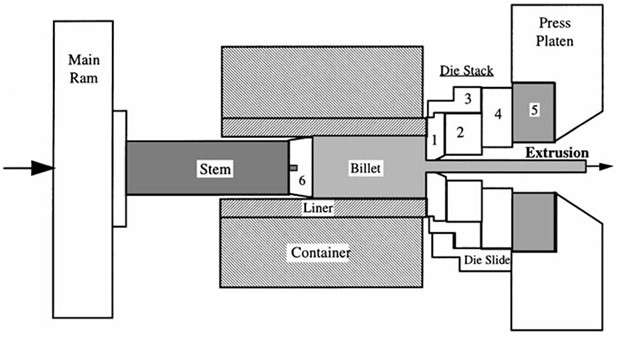 Figure 2 – Tooling configuration in direct extrusion processing with a solid die
for harder alloy.
1, solid die; 2, backer; 3, die ring; 4, bolster; 5, pressure pad; and 6, floating dummy
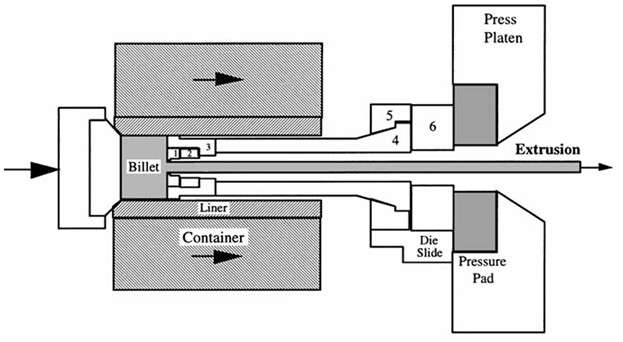 Figure 3 – Tooling configuration in indirect extrusion processing for extrusion of
the harder alloys.
1, die; 2, backer; 3; die holder; 4, die stem; 5, stem holder; and 6, bolster
Comparison Summary
The table below summarizes the key technical differences:
| Feature | Soft / Medium Alloys (e.g., 6063) | High-Strength Alloys (e.g., 7075) |
|---|---|---|
| Extrusion Pressure | Medium (300–600 MPa) | Very High (700–1200+ MPa) |
| Production Speed | Fast (15–80 m/min) | Very Slow (0.5–5 m/min) |
| Main Method | Direct Extrusion | Direct and Indirect Extrusion |
| Hollow Profiles | Made using bridge dies | Made using mandrels / piercing systems |
Useful External Links
To learn more about aluminum production and industrial standards, visit these trusted resources:
- The Aluminum Association – Official news, standards, and industry data on aluminum alloys.
- Wikipedia: Extrusion Process – Detailed scientific explanation of direct and indirect extrusion processes.
Conclusion
Extrusion presses for soft alloys are built for high speed and volume. In contrast, presses for high-strength aluminum are built for high power, precise temperature control, and slow extrusion speeds. Choosing the right press setup ensures high product quality and prevents damage to the machinery.