Global Evolution of Aluminum Alloys in Armored Vehicle Design
Aluminum alloys have fundamentally altered the doctrine of mechanized warfare by balancing high ballistic mass-efficiency with rapid strategic mobility. While traditional steel remains a staple for heavy Main Battle Tanks (MBTs), aluminum dominates the structural hulls of Light Armored Vehicles (LAVs), Infantry Fighting Vehicles (IFVs), and Armored Personnel Carriers (APCs).
By providing structural rigidity and ballistic defense at one-third the density of steel, aluminum alloys enable amphibious operations and rapid deployment via air transport.
1. Key Metallurgical Series in Military Armor
The global defense industry primarily relies on two distinct families of aluminum for ballistic protection:
-
- 5xxx Series (Al-Mg): These non-heat-treatable alloys rely on strain-hardening. They feature exceptional weldability and marine-grade corrosion resistance. Their primary role is defeating Fragment Simulating Projectiles (FSP) and dissipating blast energy from mines.
-
- 7xxx Series (Al-Zn-Mg): These are heat-treatable, high-strength alloys. They excel at resisting Armor-Piercing (AP) kinetic energy rounds due to higher hardness. However, they are historically more susceptible to stress corrosion cracking (SCC).
2. Historical Milestones & Global Field Experience
The Pioneer: M113 APC (United States)
Introduced in 1960 during the Vietnam War era, the M113 APC became the world’s first mass-produced aluminum armored vehicle. Built using AA5083-H131, the hull offered protection against small arms fire and artillery shrapnel. The historic M113 APC utilizing AA5083 aluminum armor plate.
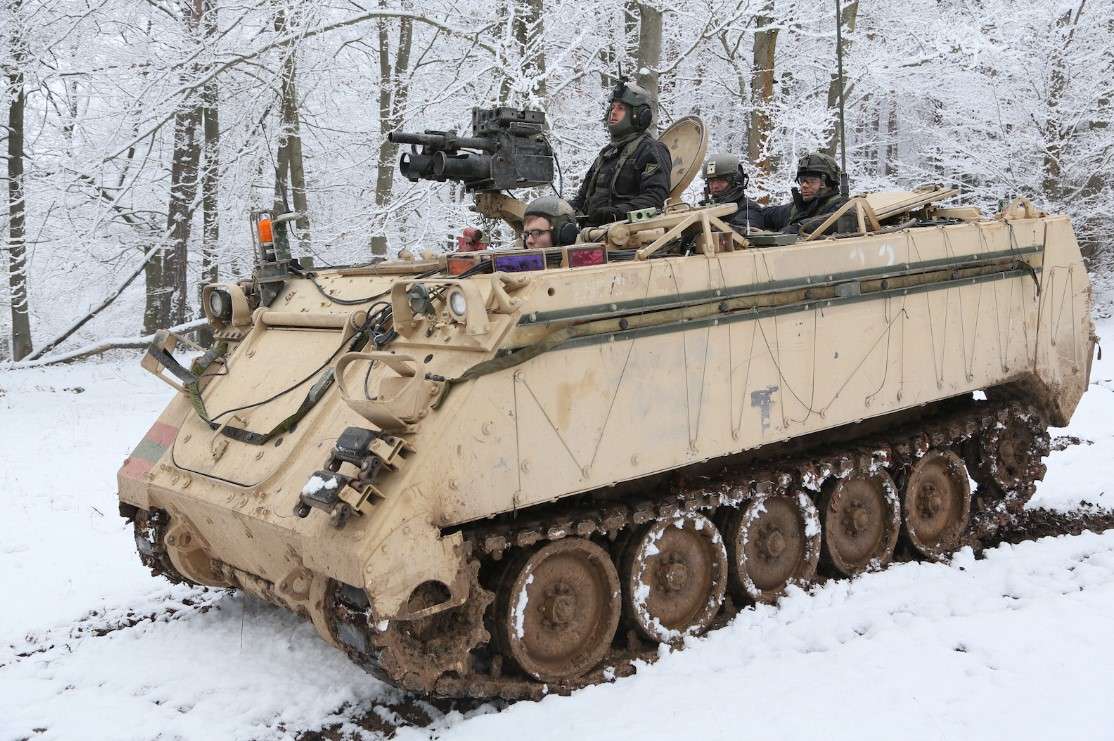
Figure 1. Army M113 armored personnel carrier.
The thickness required to match steel’s ballistic performance yielded a cross-section three times thicker, which structurally negated the need for heavy internal steel reinforcement braces. This dropped total weight by up to 20%, rendering the vehicle air-transportable.
The Firepower Evolution: M2 Bradley & M551 Sheridan
To defeat heavy machine-gun armor-piercing threats (like Soviet 14.5mm rounds), the U.S. Army shifted to AA7039-T64 for the upper hull sections of the M2 Bradley Fighting Vehicle. While it successfully checked kinetic threats, real-world deployment exposed long-term manufacturing vulnerabilities, including micro-cracking at weld seams under severe environmental humidity.

Fig. 2 – M2 Bradley Fighting Vehicle Hull Structure
European Innovations: FV101 Scorpion & BMP-3
European and Soviet designers took parallel but distinct paths:
-
- United Kingdom: The Alvis FV101 Scorpion light tank family pioneered the use of British AA7017. This alloy resolved some of the SCC vulnerabilities of early 7039 systems while retaining high kinetic protection levels.
-
- Soviet Union / Russia: The airborne-deployable BMD series and the BMP-3 IFV utilized specialized aluminum-zinc-magnesium armor (such as ABT-102). This design strategy achieved low displacement for aquatic/amphibious river crossings without sacrificing frontal defense against autocannon fragments.
3. Ballistic Dynamics: Aluminum vs. Steel
| Armor Material | Density (g/cm³) | Primary Threat Specialty | Structural Advantage |
|---|---|---|---|
| Armor Steel (RHA) | ≈ 7.85 | High-Velocity AP, Heavy Autocannons | Maximum hardness, low volume thickness |
| AA5083 (Al-Mg) | ≈ 2.65 | Shrapnel (FS), Mine Blasts, IEDs | Maximum weldability, zero rust, rigid |
| AA7039 (Al-Zn-Mg) | ≈ 2.78 | Kinetic Energy Bullets (AP) | High yield strength-to-weight ratio |
When a projectile impacts aluminum armor, the thicker plate forces a longer penetration path. This spreads the kinetic impact across a wider volume, dampening the energy via plastic deformation.
Furthermore, aluminum serves as an excellent structural backing plate in multi-layered composite armor systems beneath outer ceramic tiles, absorbing the residual shattered energy of modern anti-tank threats.
4. Modern Frontiers: Mine-Resistant and Advanced Alloys
As modern asymmetric threats turned toward Improvised Explosive Devices (IEDs), older aluminum hulls faced strict challenges due to internal spalling. To counter this, advanced metallurgical variants were deployed:
-
- AA5059 (Al-Mg-Mn-Zn): Engineered to deliver higher tensile strength than 5083, this alloy was introduced into the heavy RG-33 MRAP vehicles. It delivers elite mine-blast deflection and extreme energy dissipation.
-
- AA2139 (Al-Cu-Li): A cutting-edge lithium-alloyed option used for bolt-on or integrated perimeter armor. It offers unprecedented weight reductions while matching or exceeding the raw hardness parameters of the 7xxx series.
-
- Nanostructured Alloys: Ongoing defense research focuses on cryomilled, ultra-fine-grained (UFG) aluminum matrices reinforced with ceramic particulates to form metal matrix composites, pushing structural properties past traditional thermodynamic limits.
References / Sources
-
- Total Materia Engineering Database: Aluminum Alloys in Military Vehicles and Equipment — Analysis of 5xxx and 6xxx series deployment.
-
- Light Metal Age Magazine: Advanced Aluminum Armor Alloys — Historic overview of the M113 and ballistic dynamics of 5083-H131 vs 7039-T64.
-
- US Department of Defense (DTIC Archive): Scientific Characterization of AA7017 as a Replacement for AA7039 in Lightweight Armor Systems — Deep dive into combat corrosion cracking issues and structural vehicle testing.
-
- GlobalSecurity Industry Reports: Aluminum Armor Specifications — Case studies regarding the RG-33 MRAP and AA5059 usage.