What is melting aluminium dross?
The oxide-rich surface on melt
Dross is the oxide-rich surface that forms on melts due to exposure to air. This term is usually applied to nonferrous melts, specifically aluminium. Dross comprises a physical mixture of oxides and entrapped molten or semimolten metal.
The dross that forms on aluminium melts, aluminium melting dross, is normally considered to be an undesirable material. However, the solid form of dross is far from being undesirable. It is a valuable co-product that can have a major effect on the profitability of the producer’s operation. This comes from the simple fact that, in addition to the oxides present in the dross, it usually contains large quantities of entrapped useful aluminium alloy.
The composition of dross is dependent on the base analysis of the alloys being melted, but the major constituent in almost every case is aluminium oxide.
Aluminium Melting Dross Formation
Many different crystallographic forms of aluminium oxide can exist that are associated with molten aluminium processing. When alloying elements are added to the pure aluminum, both the rate of formation and the nature of the resultant oxide are changed dramatically. The most important of these is magnesium, which is present in almost all commercial alloys as either a trace or major alloying element.
The oxide and mixed oxide films are continuous over the surface of the melt but can grow at rates that are multiples of the growth on solid metals. This growth is supported by the entrained alloy trapped in the filmy oxides and additionally by capillary action transporting fresh aluminium through the relatively porous layer of material.
Atmospheric conditions
In addition to the growth of oxide films and dross on the melt surfaces that are induced by exposure to general atmospheric conditions, there are a number of factors encountered in industrial melters that can supplement and even alter the growth factors. These include turbulence induced by the mode of melting energy, the generation of atmospheres that are chemically more reactive, and even the addition of oxidants or contaminants with the melt stocks.
Figure 1 shows:
- complex interactions that occur between the atmosphere above the melt,
- the entrapment of useful aluminum alloy by the crumpled oxide films,
- the resultant buoyancy of oxide inclusions in the melt due to the adsorption of hydrogen onto the complex surfaces of the inclusion
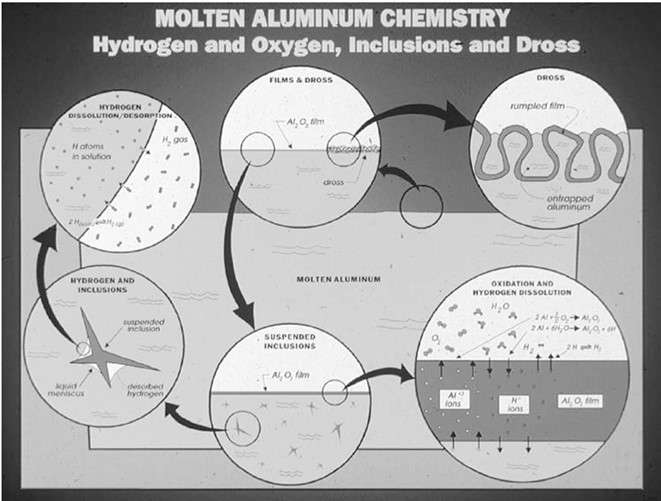
Figure 1
Melt turbulence
Turbulence caused by direct impingement of burner flames on the melt can be an especially damaging condition in accelerating the rate of dross formation. The movement on the metal surface ruptures the oxide film, exposing a new surface to oxidizing gases at elevated temperature. These gases contain potentially high levels of moisture from entrained humidity or products of combustion, further adding to the oxidation potential.
Contaminated scrap
Similarly, the melt stocks themselves can be a source of dross and contaminants as they carry in their own layer of oxide and surface moisture that reacts to generate additional oxide, while also adding hydrogen to the melt. Further, many items of scrap and returns will carry in moisture and organic compounds from die lubes, machine oil and grease, paint, and so on. These add carbides and nitrides to the suspended inclusion matter in the metal and ultimately wind up in the dross.
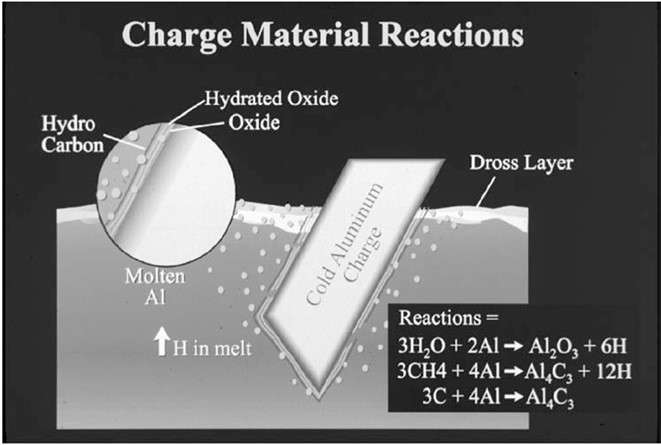
Figure 2
Figure 2 shows:
- Addition of supplementary volumes of contained surface oxides that are on the metal stocks entering the furnace molten metal.
- The presence of organic compounds will similarly react with the molten bath to add carbides and nitrides to the inclusion level.
- These suspended inclusions and oxides by themselves have a higher density than the molten aluminum but are carried to the dross layer by hydrogen gas adsorbed on the inclusion surface or gas bubbles generated by charge contaminants.
Melting temperatures and holding periods
Finally, excessive melting temperatures, long holding periods, improper burner adjustment or electrical heating controls, worn elements, and deteriorating furnace doors that permit air aspiration into the furnace will contribute to increased oxidation at the melt surface and growth of the dross layer.
The source:
- Dross, Melt Loss, and Fluxing of Light Alloy Melts / Daniel E. Groteke and David V. Neff // ASM Handbook, Volume 15: Casting, p 992-1000, 2008.