Seamless vs. Seam Aluminum Tubes: The Ultimate Guide for Beginners
Are you looking for the right aluminum tube for your next project? If you check a manufacturer catalog, you will find two main choices: seamless aluminum tubes and seam (welded) aluminum tubes. Choosing the wrong type can ruin your project, waste your money, or even cause a dangerous accident.
In this comprehensive guide, we break down the differences, production methods, materials, and real-world applications in simple terms.
1. What is the Core Difference Between Seamless and Seam Aluminum Tubes?
The main difference between these two types of tubes is how they are built on the inside. This internal structure changes how they handle weight, pressure, and bending.
- Seamless aluminum tubes have a completely solid, one-piece structure. There are no joints, welds, or hidden seams anywhere along the length of the tube.
- Seam aluminum tubes (also known as structural or welded extrusion tubes) look like one solid piece from the outside. However, they actually contain 2 to 4 hidden internal lines where separate streams of hot metal were pressed together under high pressure.
Think of it like baking. A seamless tube is like a donut made from a single, pre-shaped piece of dough. A seam tube is like taking two separate pieces of dough, rolling them out, and pressing them together at the edges to form a ring. Because of this structural difference, seamless tubes are much stronger and can handle high internal pressure without bursting.
2. Head-to-Head Comparison Table
To help you see the differences at a glance, here is a quick comparison table designed for modern WordPress layouts:
| Key Feature | Seamless Aluminum Tubes | Seam Aluminum Tubes |
|---|---|---|
| Internal Structure | 100% Solid & Monolithic | Contains 2 to 4 internal weld lines |
| Strength Rating | Maximum strength | 10% to 15% weaker at the seam zones |
| Pressure Resistance | Excellent (High-pressure safe) | Low to Medium pressure only |
| Wall Thickness Accuracy | Very high accuracy | Minor variations possible |
| Production Cost | Higher (Complex machinery) | Lower (More economical) |
| Best Used For | Critical, high-load machinery | Decorative, structural, and light use |
3. How Are They Made? (The Production Process)
Both types of tubes are made using a manufacturing process called extrusion (pressing). During extrusion, a hydraulic press pushes a heated aluminum block through a shaped die, much like pushing toothpaste out of a tube. However, the tools used for each type are completely different.
How Seamless Tubes Are Made
Seamless tubes require a highly complex manufacturing setup. The goal is to make sure the aluminum never splits apart during the entire process (Fig. 1).
- Heating: A solid cylindrical block of aluminum (called a billet) is heated until it becomes soft and plastic.
- Piercing: The press uses a powerful, independent steel needle called a piercing mandrel. This needle drives right through the center of the hot aluminum block, punching out a hole and turning it into a hollow cylinder.
- Pressing: The main ram of the press pushes this hollow block through a die. The aluminum flows into the gap between the outer die and the inner needle, creating a single, continuous tube with no joints.
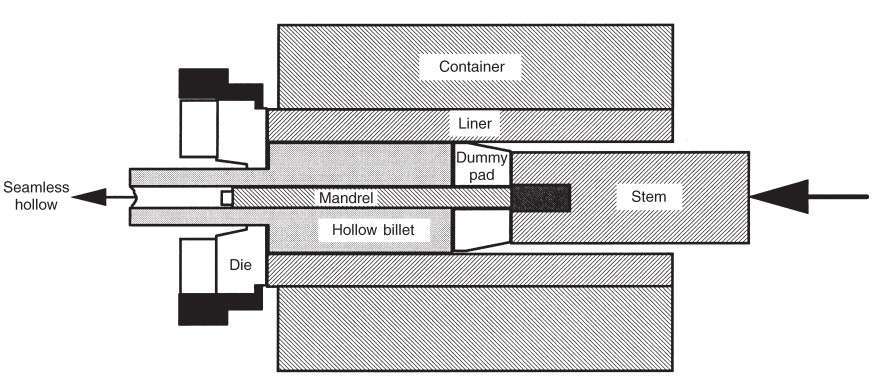 Figure 1 – Principle of seamless tube extrusion [Saha]
How Seam Tubes Are Made
Seam tubes are much simpler and faster to produce, which makes them cheaper to buy (Fig. 2).
- Heating: A solid aluminum billet is heated to its plastic state.
- Splitting: The solid block is pushed directly against a special tool called a porthole die or bridge die. Inside this die, there are fixed steel legs (bridges) that hold a central core in place. These legs cut the flowing aluminum into 2, 3, or 4 separate streams.
- Welding: Once the aluminum streams pass around the legs, they enter a welding chamber inside the die. Under extreme heat and immense hydraulic pressure, the separate streams mash back together around the core. This creates a solid tube with invisible “solid-state weld” seams (Fig. 3)
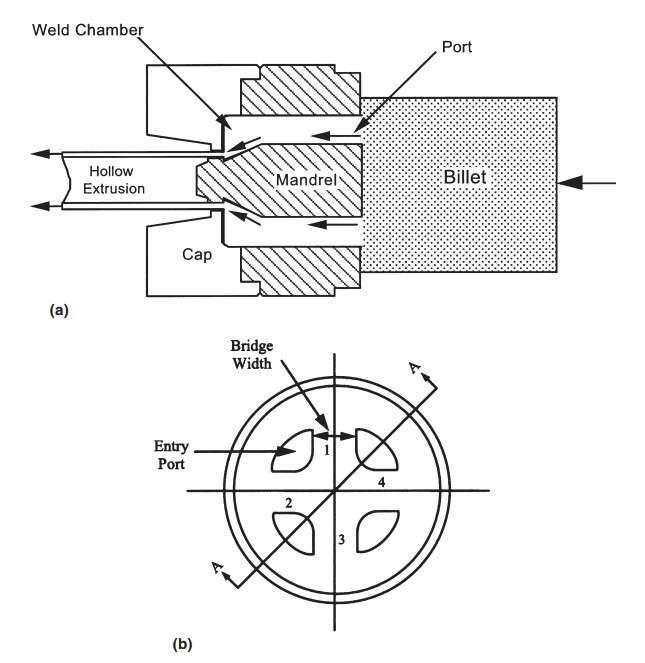 Figure 2 – Schematic of welding chamber (porthole) die hollow extrusion.
(a) Cross section showing metal flow into port streams and around the mandrel.
(b) Billet entrance face of the die set [Saha]
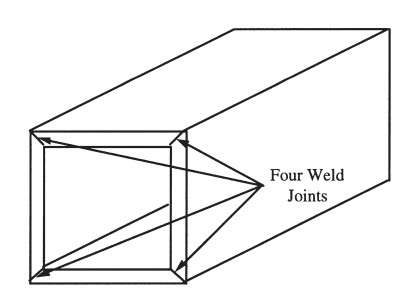 Figure 3 – Location of welding joints in a square shape [Saha]
4. The Difference in Hydraulic Presses
If you walk into an aluminum extrusion factory, you will immediately notice that the machinery used for these two tubes looks completely different.
The Seamless Extrusion Press
This is a massive, heavy-duty machine. It uses a two-cylinder design. One large cylinder operates the main pushing block, while a second, completely independent inner cylinder controls the piercing needle. Because it has to punch holes through hot metal, the machine requires much higher energy and precise calibration. The piercing needle wears out quickly and must be replaced often.
The Seam Extrusion Press
This is a standard single-cylinder press. It does not have any moving needles inside the machine. Instead, the machine simply pushes the metal straight forward. The entire magic of creating the tube happens inside the die itself. Because the machine is simpler, it can run much faster, allowing factories to produce thousands of meters of tubing every day with very little downtime.
5. Aluminum Alloys: Can You Use Any Metal?
No, you cannot use any aluminum alloy for any type of tube. This is a very important technical limitation. To make a seam tube, the aluminum must be highly plastic and capable of welding itself back together perfectly inside the die. If you try to use a hard or brittle alloy, the streams of metal will not bond, and the tube will split open immediately.
Alloys Used for Seam Tubes
These metals are highly ductile, easy to shape, and bond perfectly under pressure:
- 6063 & 6060: The absolute kings of the extrusion world. About 90% of all seam tubes, window frames, and furniture profiles are made from these alloys. They offer decent strength, great anodizing capability, and a beautiful surface finish.
- 1050 & 1100: Pure technical aluminum. It is incredibly soft, highly resistant to rust, and bonds effortlessly inside a die.
- 3003: An aluminum-manganese alloy that offers great rust protection and medium strength, often used for basic heat exchangers.
Alloys Used ONLY for Seamless Tubes
These alloys are high-strength, hard, and brittle during the extrusion process. They cannot bond back together inside a bridge die, so they must be made using the seamless piercing method:
- 2024 & 2017: These are high-strength copper-aluminum alloys. They are as strong as steel but are highly sensitive to cracking and can never be used for seam tubes.
- 7075: An ultra-high-strength alloy mixed with zinc and magnesium. It is used for heavy-duty military and aerospace equipment. It has massive resistance to deformation and will break a standard seam die.
- 5083 & 5086: These alloys contain high amounts of magnesium. The magnesium creates a thin skin of oxide on the split metal streams inside a porthole die, which physically prevents them from welding back together.
6. Real-World Applications: Which One Do You Need?
Choosing between seamless and seam tubes depends entirely on your project’s safety requirements and budget.

When to Choose Seamless Aluminum Tubes
You must use seamless tubes if your project involves high pressure, high loads, extreme safety risks, or heavy machining:
-
- Aerospace & Aviation: Fuel lines, hydraulic systems, and structural frames for airplanes and helicopters.
- Oil & Gas Industry: High-pressure pipelines transporting gases or chemicals.
- Automotive Performance: Driveshafts, high-end shock absorbers, and racing car brake lines.